
Lessons from Tesla’s Cybercab
Mar 27, 2026
Tesla has just made a mistake we commonly see in business. It went public with a new name before securing the rights to it and is now suffering the consequences.
This is surprising given Tesla’s size and standing. It’s more understandable when small businesses make the mistake of assuming that the way to secure rights to a name is through company or domain registration, rather than trademarks.
Before revealing a new name, it’s imperative to first file a trademark application in your home country. That application is generally all that’s needed to protect the name for six months internationally before you need to incur further expense.
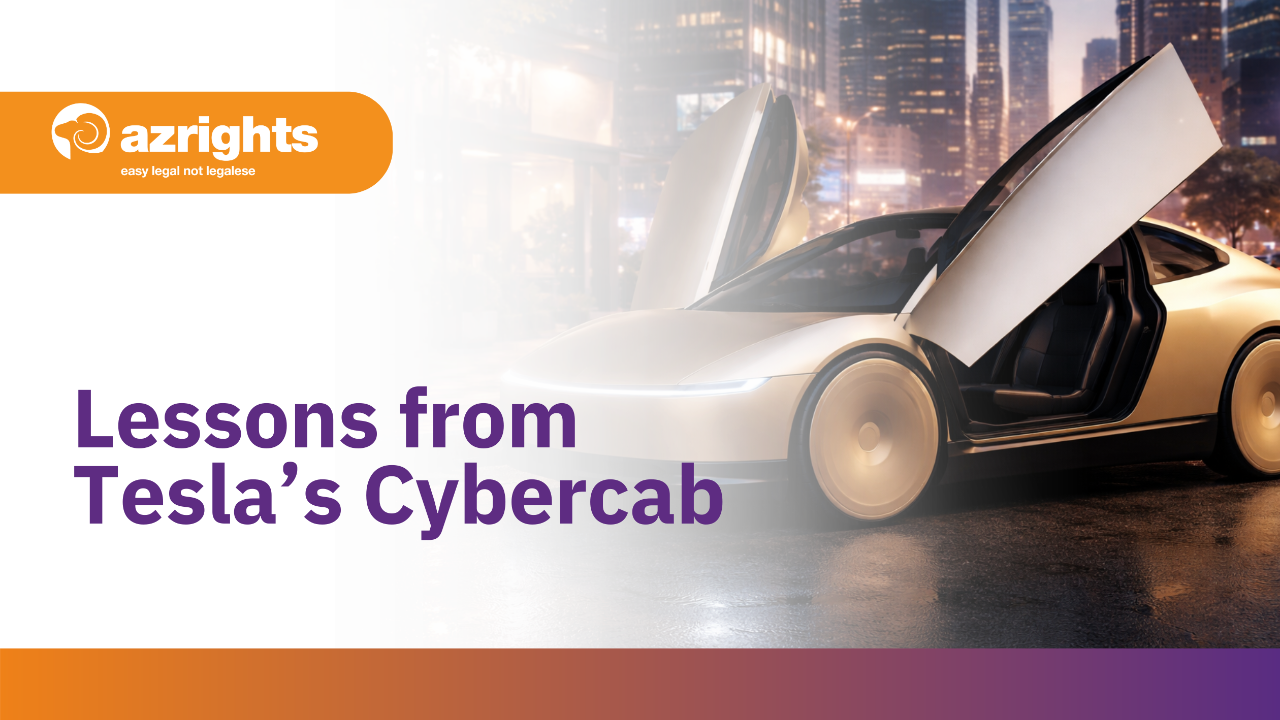
During its earnings call Elon Musk’s Tesla recently publicised its planned self-driving vehicle concept “Cybercab”. The Cybercab is intended to be a fully autonomous taxi for two passengers with no steering wheel or pedals.
Days after Tesla’s announcement, UniBev—a relatively small beverage business based in Ajaccio— filed to register the name “Cybercab” as a trademark.
A full six months after UniBev secured priority to the name, Tesla filed its own trademark application, by which time it was significantly on the back foot.
Apparently UniBev has a habit of registering names linked to Tesla’s branding. So, Tesla filed a complaint with the United States Patent and Trademark Office, alleging bad faith.
If the matter proceeds fully to a decision, it will not be finalised until 2027. That timeline creates a real commercial dilemma for Tesla as it intends to begin production of the Cybercab in 2026, with a launch to follow shortly after.
So, Tesla has this uncertainty around the name it has announced for its innovation. Much as it might hate to do so, Tesla may have to pay a substantial amount to UniBev to settle the dispute. Alternatively, it will have to consider other names such as “Cybercar” or “Cybervehicle,” which it has also applied to register. None of these options are ideal, particularly given the scale of the project and the visibility of the brand.
When you consider all the inconvenience Tesla is going through, it’s surprising that such a well-known company doesn’t have a process in place to automatically file trademark applications for names it’s considering using.
Registering a trademark is relatively low cost. In the UK, official online filing fees are currently £170 for the first class and £50 for each additional class, (increasing to £205 and £60 respectively from 1 April 2026). Tesla likely has a legal department, so could file trademark applications without incurring legal costs. However, even if you factor in legal fees, it’s a relatively small price to pay compared to the potential costs of a dispute of the type Tesla is now facing.
So, learn from Tesla’s mistake. When you next launch a new brand start with a trademark search and keep the name under wraps until you’ve filed a trademark application.
On the other hand, if you’re already using a name that you’ve not protected, trademark it as soon as possible. Think about it: everything we do in business is designed to build our name recognition. So, it stands to reason that we should secure the title deeds to our name.
If you haven’t already trademarked your name, contact me. Azrights offers several different service levels and price options to suit all budgets, and we would be delighted to support you.
 |
|
